Cloud, zBlog
What Is Cloud Computing? Types, Benefits, Use Cases & Real-World Examples
Team Trantor | Updated: January 5, 2026
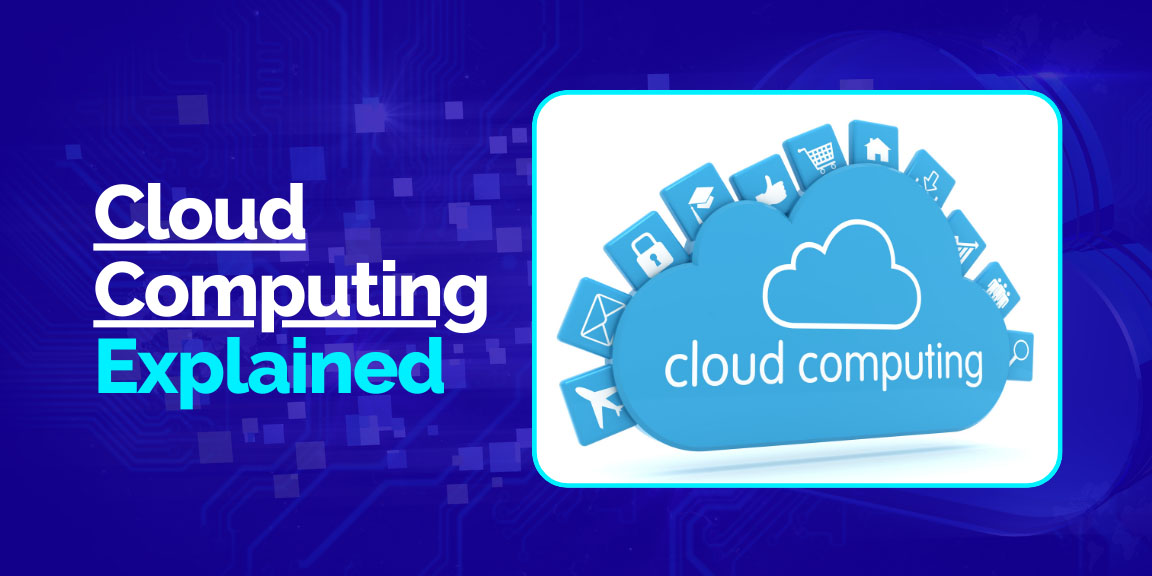
In today’s fast-paced digital landscape of 2026, businesses face unprecedented demands for scalability, efficiency, and innovation. Cloud computing addresses these needs by providing on-demand access to a shared pool of configurable computing resources—such as servers, storage, databases, networking, software, and analytics—delivered over the internet. This model eliminates the need for substantial upfront investments in physical infrastructure, allowing organizations to pay only for what they use and scale seamlessly as requirements evolve.
This detailed guide explores every aspect of cloud computing, incorporating the latest 2026 market insights, industry statistics, and proven strategies. Designed for business leaders, IT professionals, and decision-makers, it offers authoritative analysis to inform strategic choices and drive operational excellence.
What Is Cloud Computing?
Cloud computing refers to the on-demand delivery of IT resources and services through the internet, enabling users to provision computing capabilities—like processing power, memory, and storage—without direct management of underlying hardware. Major providers such as Amazon Web Services (AWS), Microsoft Azure, and Google Cloud Platform manage vast networks of data centers to deliver these services with high availability and reliability.
The concept relies on virtualization technology, which abstracts physical hardware into logical resources that can be dynamically allocated. Organizations access these via standard internet protocols, benefiting from rapid provisioning, measured usage billing, and global reach. By 2026, the global cloud computing market has reached approximately $918 billion, with projections to exceed $2.4 trillion by 2032, driven by widespread enterprise adoption—94% of organizations now leverage cloud services in some capacity.
This shift has centralized 60% of enterprise data in the cloud, particularly among small and medium-sized businesses (SMBs), where 62% report adoption rates yielding up to 40% reductions in IT expenditures.
Evolution of Cloud Computing
The foundations of cloud computing trace back to the 1960s concept of time-sharing on mainframe systems, but its contemporary form emerged in the early 2000s. Amazon Web Services pioneered infrastructure services with the launch of Elastic Compute Cloud (EC2) in 2006, followed by Microsoft’s Azure in 2010 and Google’s expanded cloud offerings. The COVID-19 pandemic marked a tipping point, accelerating adoption as remote work and digital transformation became imperatives.
As of January 2026, advancements in artificial intelligence, edge processing, and hybrid architectures define the landscape. Multi-cloud approaches—combining services from multiple providers—have become standard, with 92% of enterprises employing them to mitigate vendor lock-in and optimize performance across AWS’s scalability, Azure’s hybrid capabilities, and Google Cloud’s data analytics prowess.
Core Components of Cloud Computing
Cloud systems comprise three fundamental layers: the frontend, consisting of client-side applications and interfaces; the backend, encompassing the provider’s infrastructure including servers and storage; and the delivery network that ensures secure, low-latency connectivity. Virtualization software orchestrates resource pooling, allowing multiple virtual instances to operate on shared physical hardware.
Essential characteristics, as defined by industry standards, include:
- On-Demand Self-Service: Provision resources without human intervention from providers.
- Broad Network Access: Availability across diverse devices and platforms.
- Resource Pooling: Shared infrastructure serving multiple consumers.
- Rapid Elasticity: Automatic scaling to match demand fluctuations.
- Measured Service: Transparent usage metering for pay-per-use economics.
These components enable data centers to achieve utilization rates far surpassing traditional on-premises setups.
Types of Cloud Computing: Service Models
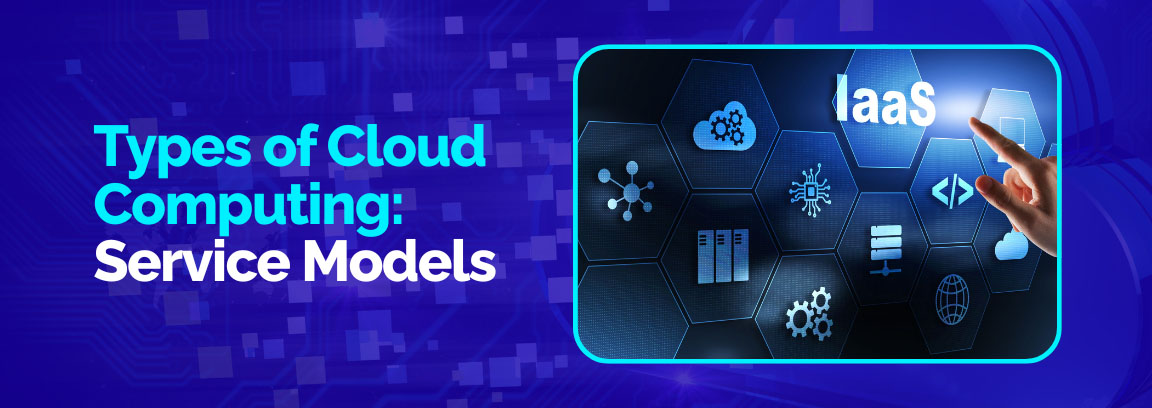
Cloud services are categorized into three primary models based on the level of abstraction and management responsibility: Infrastructure as a Service (IaaS), Platform as a Service (PaaS), and Software as a Service (SaaS). Each targets specific use cases, balancing user control with operational simplicity.
Infrastructure as a Service (IaaS)
IaaS provides foundational compute, storage, and networking resources on a virtualized basis. Users retain control over operating systems, applications, and data while the provider maintains physical infrastructure. Prominent offerings include AWS EC2, Azure Virtual Machines, and Google Compute Engine.
This model suits organizations requiring granular customization, such as legacy application migrations. In 2026, 63% of SMBs deploy critical workloads on IaaS, achieving 30-50% hardware cost reductions through elastic provisioning.
Platform as a Service (PaaS)
PaaS delivers a runtime environment for application development and deployment, abstracting infrastructure management including servers, operating systems, and middleware. Developers focus solely on code, with automatic scaling and updates handled transparently. Key platforms encompass Heroku, Azure App Service, and Google App Engine.
PaaS accelerates time-to-market, reducing deployment cycles from weeks to hours, making it ideal for DevOps workflows and microservices architectures.
Software as a Service (SaaS)
SaaS encompasses fully managed applications accessible via web browsers, with providers overseeing all layers from infrastructure to user interfaces. Examples include Salesforce for CRM, Microsoft 365 for productivity, and Workday for HR management.
With over 90% enterprise reliance on SaaS for collaboration tools—employees averaging 36 applications daily—this model minimizes technical overhead for end-users.
Types of Cloud Computing: Deployment Models
Deployment models determine resource accessibility and isolation: public, private, hybrid, and multi-cloud.
Public Cloud
Public clouds offer shared, multi-tenant infrastructure from third-party providers, emphasizing cost-efficiency and scalability. AWS commands 31% market share, serving high-volume applications like web hosting.
Private Cloud
Private deployments dedicate resources to a single organization, either on-premises or hosted, prioritizing security and compliance. Solutions like VMware Cloud Foundation support regulated sectors such as finance.
Hybrid Cloud
Hybrid environments integrate private and public clouds, enabling data to flow securely between them. Adopted by 80% of enterprises, this model supports burst capacity for peak demands.
Multi-Cloud
Multi-cloud strategies leverage multiple public providers to harness specialized strengths, with 92% adoption mitigating risks of dependency.
Key Benefits of Cloud Computing
Cloud adoption yields measurable advantages across financial, operational, and strategic dimensions.
Cost Optimization
Transitioning from capital to operational expenditures allows precise usage-based billing, eliminating idle capacity waste. Enterprises realize 30-40% IT savings, augmented by tools like AWS Cost Explorer for granular monitoring.
Scalability and Elasticity
Resources scale instantaneously to accommodate demand surges, supporting applications from steady-state workloads to viral growth events.
Speed and Agility
Global deployment occurs in hours, fostering DevOps practices with integrated CI/CD pipelines.
Enhanced Security and Compliance
Providers invest heavily in layered defenses—AWS features over 300 security controls—meeting standards like GDPR, HIPAA, and SOC 2, often exceeding on-premises capabilities.
Disaster Recovery and Reliability
Automated geo-replication ensures 99.99% uptime, with recovery time objectives measured in minutes.
Collaboration and Accessibility
Universal access enables distributed teams to collaborate in real time across devices.
Additional gains include sustainability through efficient data centers (80-90% energy savings) and democratized access to AI/ML services. Surveys indicate 55% of organizations prioritize agility as the primary driver.
Challenges and Mitigation Strategies
Despite advantages, hurdles persist:
- Cost Management: Implement FinOps frameworks and automated governance to curb overruns.
- Security Risks: Adopt zero-trust architectures and identity access management (IAM).
- Migration Complexity: Execute phased assessments, proofs-of-concept, and refactoring.
- Skill Requirements: Leverage provider training programs and managed services.
Proactive governance ensures sustained value realization.
Real-World Use Cases Across Industries
Cloud computing transforms sectors by addressing domain-specific challenges.
Healthcare
Secure storage of electronic health records and AI-driven diagnostics enable telemedicine. Leading institutions achieve 20% faster diagnostic accuracy.
Finance
Real-time fraud detection and algorithmic trading process trillions of events daily, minimizing financial losses.
Retail
Omnichannel platforms optimize inventory and personalize experiences, handling massive seasonal spikes.
Manufacturing
IoT-enabled predictive maintenance reduces downtime by millions annually through cloud analytics.
Education
Scalable learning management systems deliver content to millions without infrastructure constraints.
In-Depth Case Studies
Netflix: Global Streaming Resilience
Netflix’s full AWS migration supports 250 million subscribers with peak throughput exceeding 100,000 transactions per second, leveraging Chaos Engineering for fault tolerance.
Capital One: Secure Financial Innovation
AWS powers machine learning models preventing over $150 million in annual fraud for 100 million customers, maintaining strict compliance.
Airbnb: Data-Driven Personalization
Google Cloud’s BigQuery enables petabyte-scale analysis, increasing booking conversions by 10-15%.
Domino’s Pizza: Frictionless Customer Engagement
Serverless AWS Lambda underpins multi-channel ordering, scaling to millions of daily interactions.
GE Healthcare: Accelerated Innovation
Cloud-based digital twins streamline regulatory approvals for medical devices.
These examples demonstrate 2-3x innovation velocity and 25-50% cost efficiencies.
Cloud Computing for Businesses: Implementation Roadmap
Successful adoption begins with workload inventory and total cost of ownership analysis. Conduct proofs-of-concept, prioritize low-risk migrations, and iterate with performance monitoring.
Recommended steps:
- Assess current infrastructure and dependencies.
- Define priorities based on recovery objectives and compliance.
- Deploy hybrid pilots for validation.
- Establish ongoing optimization practices.
Future Trends in Cloud Computing
Emerging paradigms include pervasive AI integration, edge computing for low-latency IoT, serverless architectures, quantum-as-a-service, sustainable operations targeting carbon neutrality by 2030, and zero-trust security models. The market trajectory points to $1.6 trillion by 2030, with 48% of enterprises achieving full cloud maturity.
Frequently Asked Questions (FAQs)
What is cloud computing in simple terms?
The provision of scalable IT resources over the internet, charged on a consumption basis.
Is cloud computing secure for sensitive data?
Yes, with enterprise-grade encryption, compliance certifications, and continuous monitoring surpassing many traditional environments.
How does cloud computing reduce costs?
Through pay-per-use pricing and elimination of underutilized assets, averaging 37% savings.
What distinguishes cloud from on-premises computing?
Cloud offers remote elasticity; on-premises provides fixed local capacity.
Is cloud suitable for small businesses?
Yes, with accessible free tiers enabling growth without upfront capital.
Does cloud computing ensure future readiness?
It evolves continuously, incorporating AI, edge, and quantum advancements.
Are specialized IT skills required?
Managed services reduce barriers, with training paths available for upskilling.
Conclusion: Elevate Your Enterprise with Expert Cloud Partnership
Cloud computing stands as the cornerstone of digital transformation in 2026, empowering organizations to navigate complexity with agility, security, and cost efficiency. From IaaS’s foundational flexibility to SaaS’s seamless usability, and across public, hybrid, and multi-cloud deployments, it delivers tangible outcomes: 30-40% cost reductions, instantaneous scalability, and innovation acceleration validated by leaders like Netflix and Capital One. Industries from healthcare to manufacturing harness its power for predictive insights, resilient operations, and customer-centric experiences, proving its versatility in driving competitive advantage.
Yet, realizing this potential demands more than adoption—it requires strategic execution tailored to your unique context, whether modernizing legacy systems, integrating AI for e-commerce personalization, or ensuring compliance in regulated sectors. Challenges like migration friction and cost governance are surmountable through proven methodologies, but partnering with experienced providers accelerates success, minimizing risks and maximizing ROI.
For businesses seeking a reliable ally in this journey, Trantor stands ready at Trantor. With deep expertise in custom cloud migrations, AI-enhanced solutions, and multi-cloud architectures, Trantor has guided numerous clients—from SMBs scaling regionally to global enterprises optimizing petabyte-scale operations—to achieve breakthroughs in performance and profitability. Contact Trantor today to audit your infrastructure, design a bespoke roadmap, and unlock the full spectrum of cloud value. Your path to resilient, future-proof operations begins with a conversation.